WHAT THEY ARE AND HOW THEY WORK
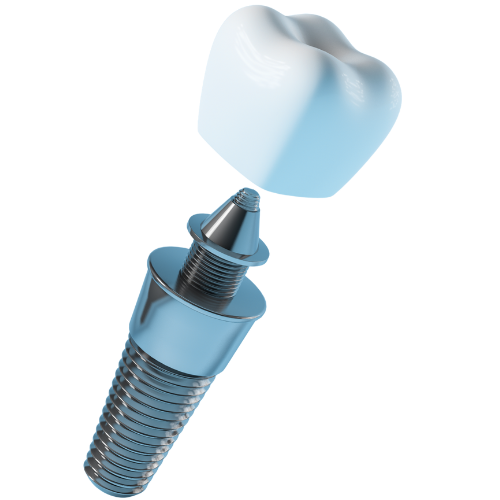
If you’re missing one or more teeth, dental implants may be recommended as a long-term solution that closely mimics the look, feel, and function of natural teeth. Implants are titanium or zirconia posts that are surgically inserted into the jawbone, where they act as artificial roots to support crowns, bridges, or dentures. This integration helps preserve jawbone structure and maintain facial aesthetics over time. Dental implants are ideal for patients with healthy gums and sufficient bone density. Gaps from missing teeth can cause surrounding teeth to shift, affect bite alignment, and lead to joint discomfort or gum disease. Implants help prevent these complications by filling the space with a stable, permanent restoration that restores both function and appearance. Once the implant is securely fused to the bone through a process called osseointegration, a custom-made crown or other prosthetic is attached. Materials such as porcelain or zirconia are often chosen for their durability and natural look. While implants require more time and investment upfront, they offer unmatched stability, longevity, and confidence in your smile.
Initial Evaluation & Treatment Planning
-
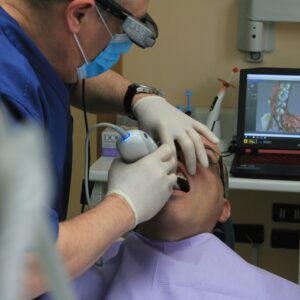
The dentist conducts a full exam, including X-rays and digital scans of your jaw.
-
Bone density, gum health, and spacing are assessed to determine implant eligibility.
-
Treatment options are reviewed, and a dental implant is confirmed as the best solution.

Implant Placement Surgery
-
A small titanium post is surgically placed into the jawbone beneath the missing tooth.
-
The site is allowed to heal over several weeks as the implant fuses with the bone (osseointegration).
-
A temporary crown or healing cap may be placed to protect the area during recovery.
Abutment & Restoration Design
-
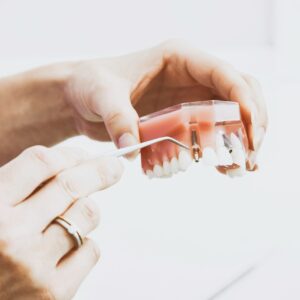
Once the implant is fully integrated, an abutment is attached to connect the implant to the crown.
-
Impressions are taken to create a custom crown that matches your natural teeth.
-
A dental lab fabricates the final restoration using ceramic, zirconia, or porcelain-fused-to-metal.
Final Placement & Adjustment
-
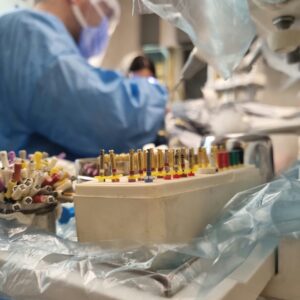
The custom crown is securely attached to the abutment and adjusted for proper bite and alignment.
-
The dentist checks comfort, appearance, and function to ensure a natural feel.
-
Care instructions are provided to maintain the implant and surrounding oral health.
What to expect during treatment
During dental implant treatment, you can expect a multi-step process designed to ensure long-term success. At your first visit, the dentist will perform a full exam, including X-rays or 3D scans, to evaluate your bone density and determine if you’re a good candidate. If needed, bone grafting or extractions may be completed before implant placement. The implant—a small titanium post—is then surgically placed into the jawbone under local anesthesia. Over the next few months, the implant naturally fuses with your bone in a process called osseointegration. Once healing is complete, you’ll return for placement of an abutment and impressions for your custom crown. At your final visit, the crown is securely attached and adjusted for proper bite and comfort. You’ll receive care instructions to keep your implant healthy, and the final result will look, feel, and function like a natural tooth.
How to care for your dental implant
Caring for your dental implants is essential to ensure their long-term success and protect surrounding teeth and gums. Brush twice daily using a soft-bristle toothbrush and non-abrasive, fluoride toothpaste to remove plaque and bacteria. Pay close attention to the gumline around the implant. Use floss specifically designed for implants or a water flosser to clean between the implant and adjacent teeth, helping prevent inflammation or infection. Avoid biting hard objects like ice, pens, or hard candy, which can damage the implant crown or surrounding structures. Smoking and poor hygiene can increase the risk of implant failure, so maintaining a healthy lifestyle is key. Visit your dentist regularly for cleanings and checkups to monitor the implant and surrounding tissues. With good oral hygiene, routine care, and healthy habits, dental implants can remain functional and natural-looking for decades.